
The Price of a Miracle
Stranger in a Strange LandThis thread traces the tension between Smith’s protective abilities and his growing willingness to use them against people he judges dangerous.
increasing Bearing strength in each event
 decreasing
Bearing strength in each eventdecreasingThe First Disappearances

Protection Becomes Force
A sudden intervention
When an officer strikes Gillian, Smith makes the attacker disappear. He then removes Berquist when the latter threatens her with a gun.
Shock and withdrawal
Smith interprets his action as a possible mistake and collapses into trance. The scene establishes that his power is not merely defensive spectacle; it carries moral weight for him.
Learning to Control the Power

Questions of Scope
Demonstrations for witnesses
Harshaw tests whether Smith can make objects disappear, suspend them, and remove a weapon without killing its holder. Smith follows the precise wording of each request.
Danger without mastery
The tests reveal that Smith’s abilities depend on understanding and intention, not simple physical force. Harshaw begins warning others that a gentle appearance does not mean Smith is harmless.
Violence at the Pool

A Defense Becomes Decisive
Threats multiply
Special Service officers arrive armed and attempt to arrest Harshaw, Smith, and Gillian. Harshaw’s legal objections buy a little time but cannot remove the immediate danger.
Smith acts at distance
From beneath the pool, Smith perceives the threat and removes the attackers and vehicles. His action saves the household while raising questions about accountability and proportionality.
The City’s Violent Men

A Larger Judgment
A list accumulated
Smith says he has long been observing violent people in the city. Once he decides that they are a danger, he makes roughly 150 disappear.
Protection or execution
He views the act as removing people from a game, not killing them. The scale of the action nevertheless makes him judge and executioner without human process.
The Refusal to Imprison
Freedom as a Principle
A jailbreak with consequences
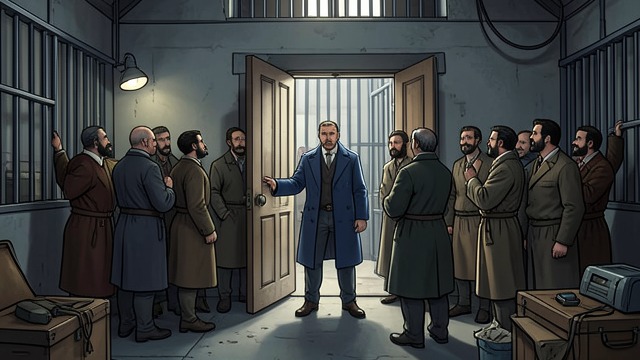
Smith escapes custody and removes bars and doors from prisons. He also disarms local law enforcement, rejecting confinement as an inherent wrong.
A public limit
His actions make the authorities’ coercive power look fragile, but they cannot persuade the crowd to accept his ethic. At the climax, force returns in its crudest form.
During the escape from Harshaw’s apartment
During the experiments at Harshaw’s home
During the first attempted raid on Harshaw’s home
After Smith’s church is attacked
During the final city crisis
